Last week’s Great ShakeOut drill had schools and offices across Washington practicing drop, cover and hold on. It’s a good reminder that the Puget Sound region sits on some serious faults. There’s the Seattle Fault running under the city, the Cascadia Subduction Zone offshore, and deep quakes like the magnitude 6.8 Nisqually earthquake in 2001.
After a big earthquake, broken gas lines and damaged appliance connections are one of the main causes of fires. An automatic seismic gas shutoff valve is a simple way to cut that risk. Here’s how the valves work, what Puget Sound Energy recommends about shutting off gas after a quake, and what installation involves.
What a seismic gas shutoff valve does
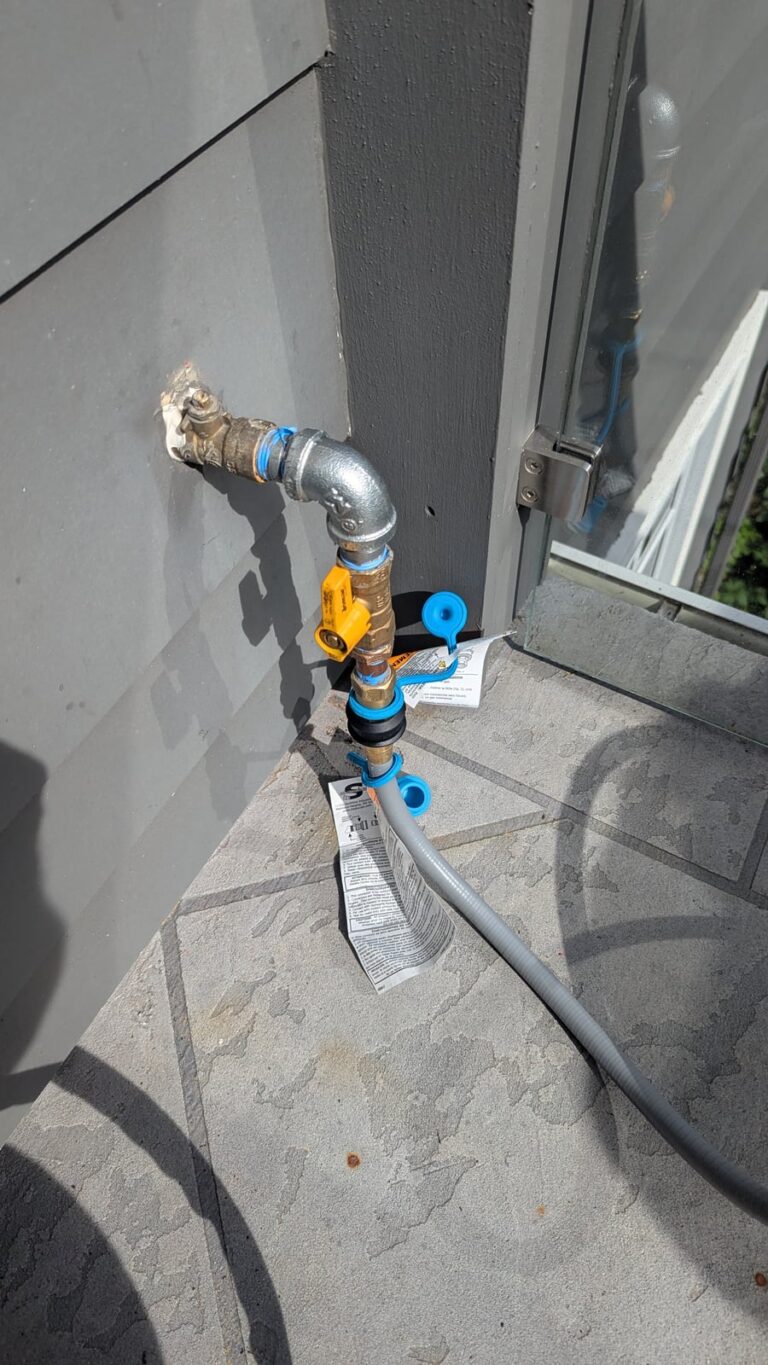
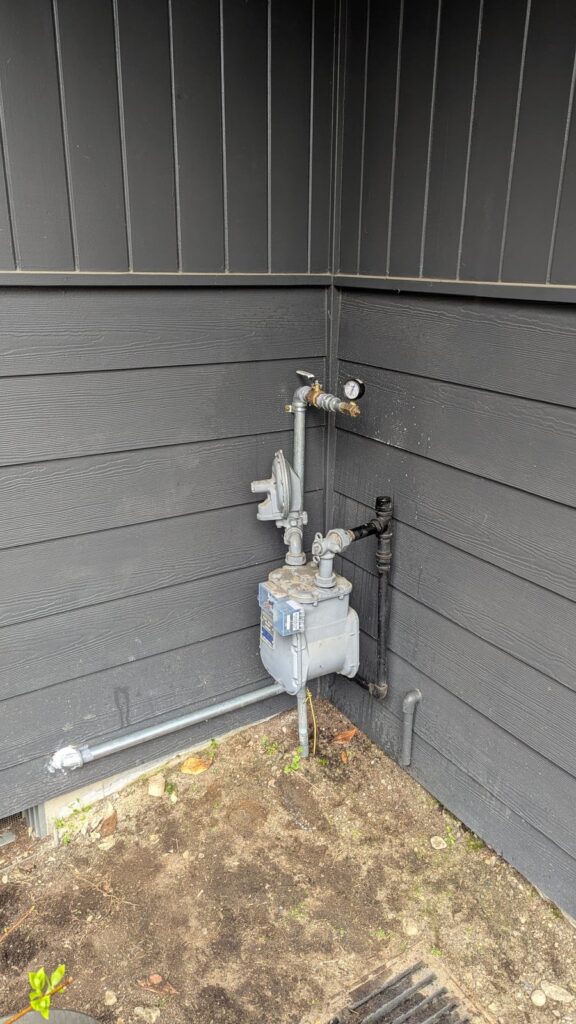
A seismic valve, also called an earthquake valve, installs on your gas piping just past the meter. Inside is a mechanism that stays put during normal vibration but trips when the ground shakes hard enough. Most residential valves are designed to close in shaking roughly equal to a magnitude 5.4 quake nearby. When that happens, it shuts off gas to the whole house within seconds.
It doesn’t need electricity, and it works even if you’re asleep or away from home. Once it trips, it stays closed until someone resets it. Small tremors and everyday vibration won’t set it off when it’s installed correctly.
Can’t I shut off the gas myself?
You can, and every adult in the house should know where the meter is and how to do it. But PSE’s own guidance is more specific than “turn off the gas after an earthquake.” They say to shut off gas at the meter only if you smell gas, hear it escaping or suspect a leak. If you do turn it off, they ask that you call PSE to turn it back on, not do it yourself. They also warn that after a major quake, it could take a long time for a crew to reach your house.
A seismic valve changes the math in two ways. It reacts in seconds, without anyone having to grab a wrench and find the meter in the dark. And because it sits on your side of the meter, it can be reset once the house has been checked for leaks, instead of waiting days for the utility to restore service at the meter.
Seismic valve vs. excess flow valve
People sometimes confuse these. An excess flow valve sits in the utility’s service line and closes if the line is broken and gas suddenly rushes out, like when an excavator hits it. It doesn’t respond to shaking, and it won’t catch a smaller leak inside the house. PSE customers who don’t have one can ask PSE to install one at their own expense.
A seismic valve responds to the earthquake itself, before you know whether anything broke. The two do different jobs, and having both isn’t overkill.
Want an earthquake valve on your gas line?
Installation usually takes an hour or two. Tell us about your meter setup and we’ll give you a free estimate.
Are they required in Washington?
Not statewide. California has required them in many cities for years, and Washington has looked at adding seismic valve rules to the state code, but for most homes here the valve is optional. Local rules can differ, so if you’re building new or doing a major remodel, we’ll check what your city or county requires during the site visit.
Installation and cost
The valve goes on the house piping right after the meter. We shut off the gas briefly, install the valve, restore service, test for leaks and relight the pilots. On most homes it’s a one- to two-hour job, and like other gas piping work, it needs a permit.
How it’s installed matters more than people think. The valve has to be mounted level and plumb, sized for your gas load, and positioned where it won’t get bumped by a lawn mower or garbage can. PSE notes that a poorly installed valve can trip from vibration that has nothing to do with an earthquake. If you’re comparing valves, look for one certified to ASCE 25, the national standard for earthquake-actuated gas shutoffs.
A residential seismic valve typically costs $250 to $750 installed, and many homes land around $350. It runs higher if the meter is hard to reach or the piping at the meter needs to be reworked to fit the valve.
What to do after the valve trips
If every gas appliance in the house goes out at once after a quake, the valve probably did its job. Before resetting it:
- Check for the smell of gas, hissing or obvious damage to piping and appliances. If you notice any of those, leave the house and call 911 or the utility from outside. Don’t reset the valve.
- If everything seems fine, turn off the gas valves at your appliances.
- Reset the seismic valve following the manufacturer’s instructions for your model.
- Turn the appliance valves back on one at a time and relight any pilots.
After a strong quake, it’s worth having the gas system inspected before you reset, since ground movement can stress joints in places you can’t see. If you’re not comfortable doing any of this, call us and we’ll handle the inspection, reset and relighting.
A few more earthquake gas safety steps
A seismic valve works best alongside a few basics. Make sure your water heater is strapped to the wall, since a tipped water heater can tear its gas connection loose. Replace any old uncoated brass appliance connectors with modern flexible ones. And keep a gas shutoff wrench near the meter, so whoever’s home can act if there’s a leak.
If you ever do smell gas, our guide to the signs of a gas leak and what to do covers the steps. For a full check of an older system, see what a gas line inspection covers.
Get your seismic valve installed
We install certified earthquake gas shutoff valves across King, Snohomish and Skagit counties, permit included. Most installs take an hour or two.
Read more about the valves we install on our seismic shutoff valve page.
Common questions
Will a passing truck or a small quake shut off my gas?
Not if the valve is installed correctly. It’s designed to ignore everyday vibration and the small tremors the region gets regularly. False trips usually come from a valve that’s mounted crooked or gets knocked into.
Does PSE install seismic valves?
No. PSE doesn’t install or maintain them. The valve goes on the customer’s side of the meter, so it’s installed by a licensed gas contractor under a permit.
Are there seismic valves for propane?
Yes. Earthquake valves are made for propane systems as well as natural gas. We install them on rural homes that run on a propane tank.
How do I know if my valve tripped?
The giveaway is that every gas appliance stops at once: no hot water, the furnace won’t fire, the stove won’t light. Check the valve itself, and look for the tripped position described in the manufacturer’s instructions.