Summer evenings around Puget Sound start out warm and turn chilly fast. Once the sun drops behind the Olympics, the temperature on the deck can drop 10 or 15 degrees in a couple of hours, and everyone heads inside for a sweatshirt. A patio heater keeps people outside longer, and on natural gas it does that without propane tanks to swap or a giant electric bill.
There’s more than one kind of gas patio heater, though, and the right choice depends on how open or covered your patio is. Here’s how the options compare, where they can go, what the gas line involves and what it costs.
Types of natural gas patio heaters
Freestanding heaters
These are the tall “mushroom” heaters you see on restaurant patios. The natural gas versions connect to a quick-disconnect outlet with a hose, so you can move them a few feet or put them away for the winter. They usually put out around 40,000 BTUs and warm a circle of people standing or sitting nearby. They work best on open patios with plenty of overhead room.
Wall- and ceiling-mounted infrared heaters
Mounted infrared heaters sit up on a wall, beam or ceiling and aim heat down at the seating area. Infrared warms people and surfaces directly, the way the sun does, so it holds up better in a breeze than heaters that warm the air. These are the go-to choice for covered patios and outdoor rooms, and since nothing sits on the floor, they free up space. They’re hard-piped, not on a hose.
Tabletop and fire tables
Small tabletop heaters and gas fire tables add some warmth for the people sitting closest, but they’re more about atmosphere than heating a whole patio. If you’re leaning toward a fire feature, our post on planning a natural gas fire pit covers that side.
Natural gas vs. propane and electric
Propane heaters are portable, but a 20-pound tank feeding a 40,000 BTU heater lasts about 10 hours on high, so a few summer evenings and it’s back to the exchange cage. Natural gas never runs out.
Electric infrared heaters are popular too, and they’re a good fit for small covered spaces. The bigger units usually need a dedicated 240-volt circuit, though, which can mean electrical work. If your house already has gas and you’re heating a larger area, gas heaters typically put out more heat per unit.
Where you can put them
This is where the type of heater really matters. Every gas patio heater has clearance requirements to ceilings, walls and anything combustible, and they’re listed in the installation manual. Freestanding heaters generally need a lot of room overhead, which is why they’re a poor fit under a low patio cover.
Mounted infrared heaters are designed for covered areas, but the area still has to be open enough to vent. Gas patio heaters release combustion gases into the space they heat, so manufacturers require a certain portion of the walls to stay open. Bromic, one of the common brands, treats a space as outdoors when at least 30 percent of the walls are open. A screened porch or a patio enclosed with roll-down walls may not qualify. Never use a gas patio heater indoors or in a fully enclosed room.
Mounting height matters for comfort too. Too low and it’s uncomfortable for the person sitting under it, too high and the heat spreads out before it reaches anyone. We look at the ceiling height and seating layout before picking a spot.
Want to use your patio later into the evening?
Send us a photo of your patio and tell us where your gas meter is. We’ll recommend a heater setup and give you a free estimate for the gas line.
Running the gas line
For a freestanding heater, we install a quick-disconnect outlet with its own shutoff valve near the patio. The fitting seals itself when the hose is unplugged, so you can roll the heater away without shutting anything off.
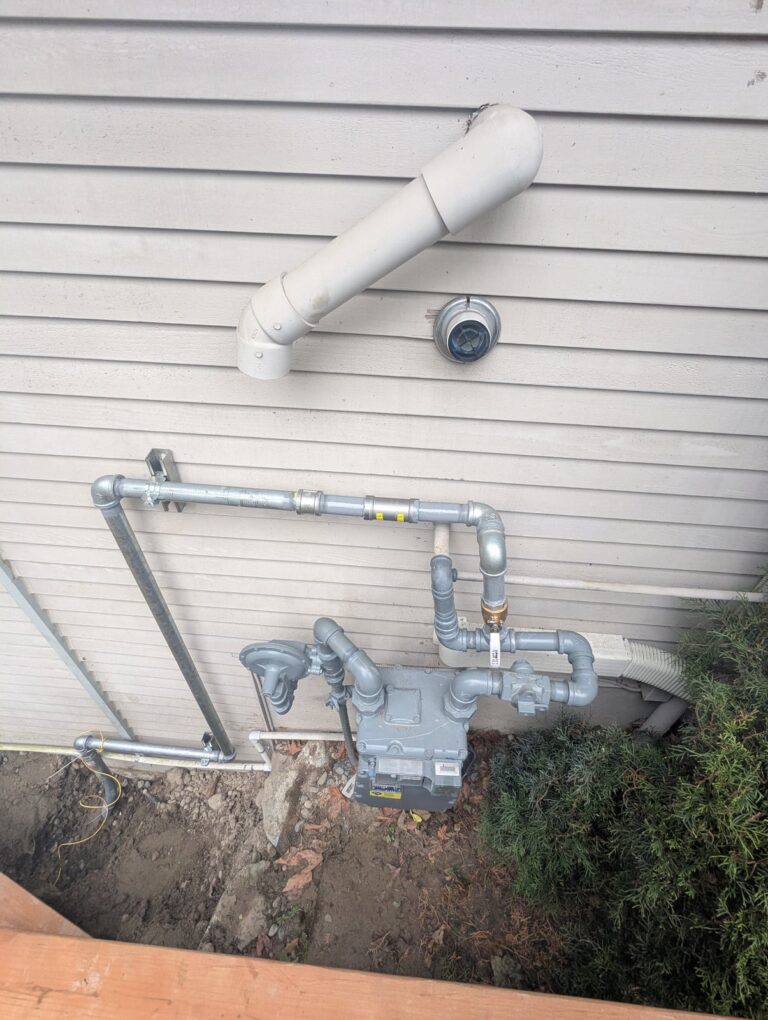
Mounted heaters get a hard-piped line, usually run along the house or through the patio cover framing to each heater, with a shutoff for each one. If you want the heaters on a wall switch or timer, that’s done with an electronic ignition model and some electrical work, so plan it before the ceiling is finished.
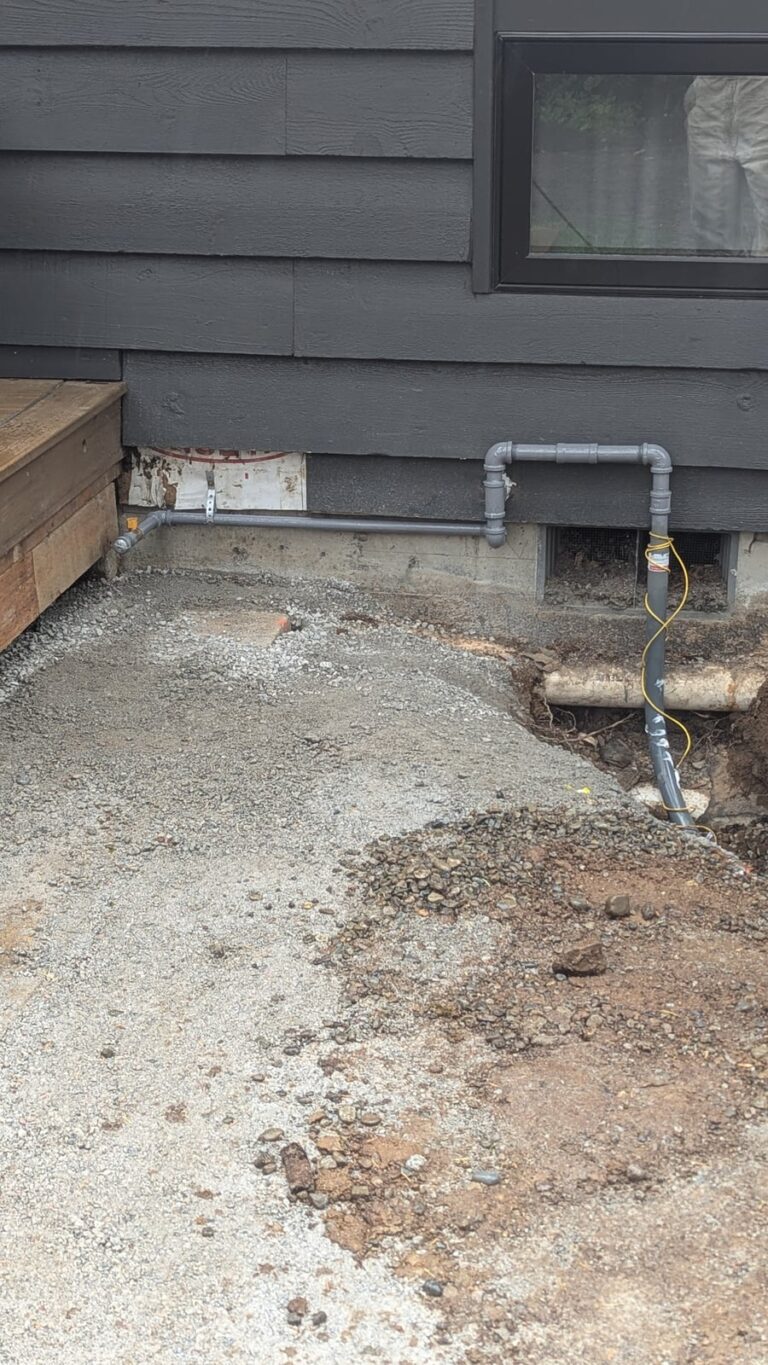
If the patio sits away from the house, the line goes underground, which means a trench and a call to 811 first. And because two or three heaters add up fast, we size the pipe for all of them together, plus anything else you might put on the same line later, like a grill or fire pit.
What it costs
Like most outdoor gas projects, there are two parts: the heaters and the gas line.
Heaters range from a few hundred dollars for a basic freestanding unit to a few thousand for a premium mounted infrared model with electronic ignition. Most people with a covered patio end up with one or two mounted heaters.
The gas line for a patio heater setup typically runs about $600 to $1,300, similar to a line for a grill or fire pit. Several mounted heaters, a long run from the meter or trenching across the yard push it higher. A permit adds to the total. For more on what moves gas line pricing, see our guide to gas line installation cost in the Seattle area.
Plan the whole patio at once
If you’re adding heaters, think about what else might end up out there in the next few years. A built-in grill, a fire table or an outdoor kitchen can all share the same line if it’s sized for them now. Running one line properly costs a lot less than trenching or opening the patio cover twice.
Add gas heat to your patio
We run and permit gas lines for patio heaters, quick-connect outlets and full outdoor living setups across King, Snohomish and Skagit counties.
See the outdoor equipment we connect on our appliance hookups page.
Common questions
Can I use a gas patio heater on a covered patio?
Usually, if you choose a heater designed for it and the space is open enough. Mounted infrared heaters are made for covered patios, as long as you meet the manufacturer’s clearances and open-wall requirements. Freestanding heaters generally need open sky or a high ceiling.
How many heaters do I need?
It depends on the size of the seating area, the ceiling height and how exposed the patio is to wind. One mounted heater often covers a small dining area, and larger patios usually need two or more. We’ll suggest a layout when we see the space.
Can I convert my propane patio heater to natural gas?
Some models offer a conversion kit, many don’t. The orifice and regulator have to match the fuel, so check the manufacturer’s options before you buy a gas line for it. Send us the model and we’ll tell you what’s possible.
Do I need a permit?
Yes, for the gas line. New gas piping in Western Washington needs a permit and an inspection, and we take care of both.