October is when the garage stops being comfortable. Mornings are damp and in the 40s, tools are cold to the touch, and the workbench project you started in August sits untouched until spring. A natural gas garage heater changes that. It warms the space up in minutes, costs less to run than most electric heaters of the same size, and keeps a shop usable all winter.
Garages come with their own safety rules, though, because of the cars, fuel and fumes stored in them. Here’s how to choose a gas garage heater, where it can be installed, what the gas line takes and what it costs.
Types of gas garage heaters
Forced-air unit heaters
The most common choice is a compact unit heater that hangs from the ceiling or a wall bracket and blows warm air across the space. They heat the air quickly, cover a typical two-car garage well and vent outside through the wall or roof. Most need a 120-volt outlet for the fan and ignition.
Infrared tube heaters
Infrared tube heaters run a long radiant tube along the ceiling and warm the floor, objects and people below. They’re a good fit for larger shops, high ceilings and spaces where the big door opens often, since the heat isn’t lost the moment cold air rushes in.
What about vent-free heaters?
Vent-free gas heaters are cheap and easy to hang, but they release combustion byproducts and moisture straight into the garage. Moisture means rust on tools and condensation on cars, and in a shop where you’re running engines or using solvents, adding combustion gases to the air is a bad idea. We recommend vented heaters for garages.
Sizing the heater
Garage heaters are rated in BTUs, and common sizes run from about 30,000 to 125,000. How big you need depends on the square footage, ceiling height, insulation and how warm you want it. In our mild climate, a typical insulated two-car garage usually lands somewhere in the 30,000 to 60,000 BTU range. An uninsulated garage, a detached shop with tall ceilings or a space you want shirt-sleeve warm on a frosty morning needs more.
Insulation pays off here. An insulated garage door and walls let a smaller heater do the job and cut what you spend on gas.
Want a warm garage this winter?
Tell us the size of the space and whether it’s attached or detached. We’ll recommend a heater size and give you a free estimate for the gas line and install.
Garage safety rules
Gasoline vapor is heavier than air and settles near the floor. That’s why fuel gas codes require the burners and ignition source of a gas appliance in a residential garage to sit at least 18 inches above the floor. Ceiling-hung unit heaters clear that easily. It’s one reason we don’t put heaters on the floor.
The heater also has to be protected from vehicles. A unit mounted where a truck tailgate or a garage door opener track could hit it is a problem waiting to happen. Every heater has listed clearances to the ceiling, walls and anything combustible, and those include shelves, storage bins and the car itself.
For woodworking shops, sawdust is the other concern. Fine dust drawn into a standard heater’s burner can build up and become a fire risk. Separated-combustion heaters pull their combustion air from outside through a sealed intake, which keeps shop dust out of the burner. If you run a table saw or sander in there, it’s worth the upgrade.
Running the gas line
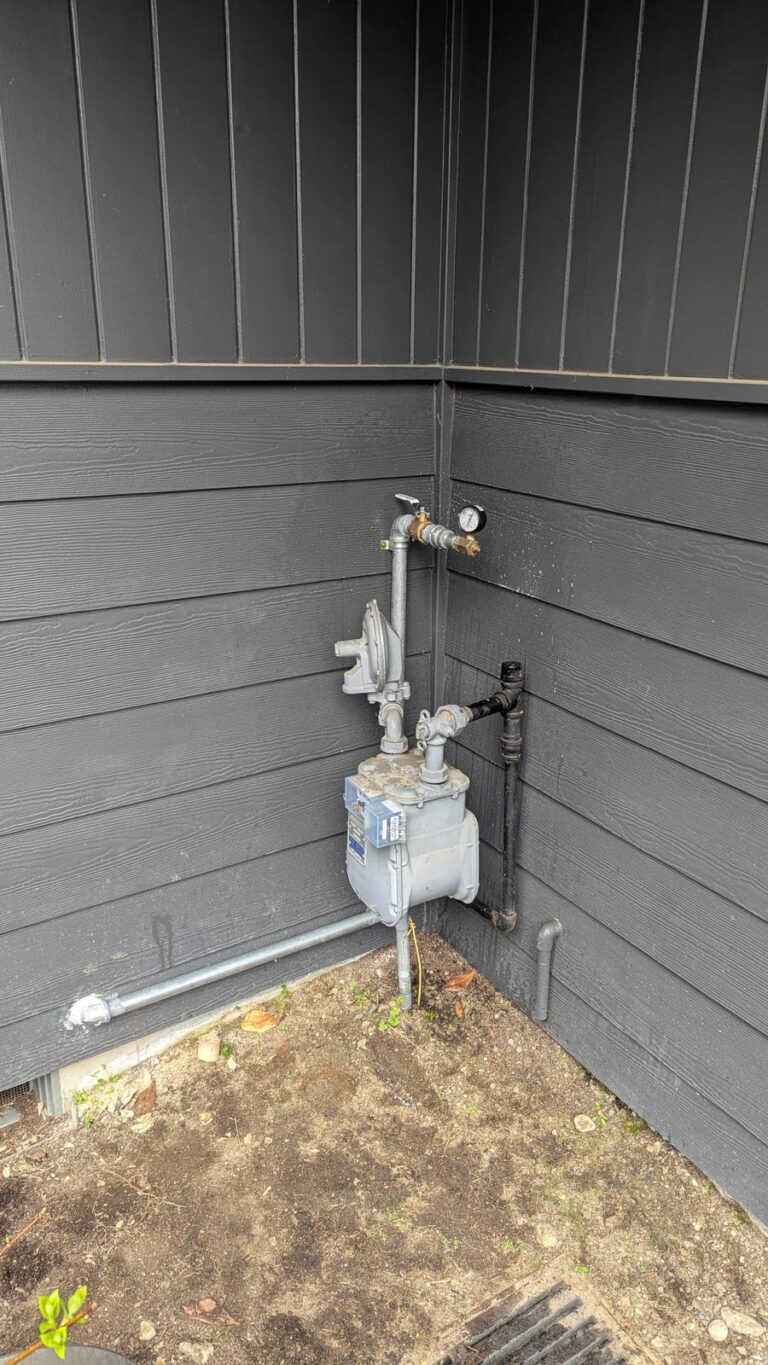
For an attached garage, the line is usually a branch off your existing gas piping, often through the crawlspace or along the wall to the heater. It’s typically one of the simpler gas jobs we do.
A detached garage or shop needs a buried line across the yard, which means a trench, a call to 811 and polyethylene pipe that transitions to steel where it comes up at the building. Bigger heaters, or a shop that might add a second heater later, need larger pipe. We size it for the heater you’re installing plus whatever you’re likely to add.
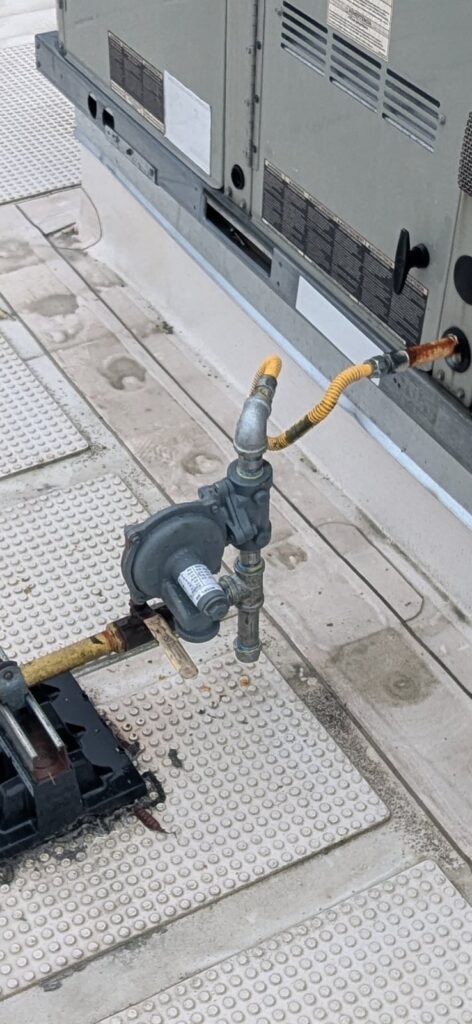
Either way, the heater gets its own shutoff valve and a sediment trap, and the new line is pressure-tested before it’s put into service. Gas piping and the heater install both need permits, which we pull.
Thermostats and running costs
Most unit heaters run off a standard wall thermostat, which makes them easy to manage. A lot of people keep the garage at 45 or 50 degrees through the winter to protect paint, glue and anything that shouldn’t freeze, then bump it up an hour before working out there. Heating only when you need it keeps the gas bill reasonable.
Put the thermostat on an inside wall, away from the heater’s airflow and the big door, so it reads the room accurately. A ceiling fan on low helps push warm air down from the ceiling, especially in a garage with tall ceilings.
What it costs
Natural gas garage heaters themselves typically run $400 to $2,000, depending on size and type. Separated-combustion and infrared tube heaters sit at the higher end.
On top of that is the gas line, venting and installation. For an attached garage close to existing gas piping, that’s often a modest add-on. A detached shop that needs a trenched line across the yard costs more, sometimes as much as the heater or more. You may also need an outlet for the heater’s fan. For more on what drives gas line pricing, see our guide to gas line installation cost in the Seattle area.
Heat your garage or shop with gas
We run the gas line, install and vent the heater, and handle the permits for attached garages and detached shops across King, Snohomish and Skagit counties.
Learn more about how we run new lines on our gas line installation page.
Common questions
Is a gas garage heater safe?
Yes, when it’s a vented unit installed to code: burners at least 18 inches off the floor, proper clearances, protected from vehicles and vented outside. A carbon monoxide alarm in an attached garage or the adjoining room is a smart addition.
What size heater do I need for a two-car garage?
For an insulated two-car garage in Western Washington, usually something in the 30,000 to 60,000 BTU range. Uninsulated spaces, high ceilings and detached shops need more. We’ll size it when we see the space.
Can I run gas to a detached shop?
Yes. We trench a buried line from the house to the shop, bring it up into the building and connect the heater. It’s a common project for rural properties in Snohomish and Skagit counties.
Can a garage heater run on propane?
Yes. Most unit heaters come in propane versions, fed from an outdoor tank. The line has to be sized for the heater’s demand, just like natural gas.