When the bomb cyclone hit in November 2024, more than 470,000 Puget Sound Energy customers lost power at the peak, and some neighborhoods east of Seattle were dark for days. That storm sent a lot of people shopping for whole-house generators, and windstorm season is back.
A natural gas standby generator starts on its own within seconds of an outage and runs as long as the outage lasts, with no refueling. The part people tend to underestimate is the gas line. A generator uses far more gas than the rest of the house, and if the line or meter can’t keep up, the generator struggles at the exact moment you need it. Here’s what goes into getting the gas side right.
How much gas a standby generator uses
Take a popular size as an example. Generac’s 22-kilowatt air-cooled unit is rated at 19.5 kilowatts on natural gas, and at full load it burns somewhere over 300 cubic feet of gas an hour. That works out to roughly 300,000 BTUs.
For comparison, a typical furnace, water heater and range together might add up to around 200,000 BTUs. So the generator alone can demand more gas than everything else in the house combined, and during an outage, the furnace and water heater may be running at the same time.
Sizing the gas line and the meter
Generators are picky about gas pressure. The manufacturer specifies a pressure range the gas has to arrive at while the unit runs at full load. For Generac’s air-cooled models, that’s in the range of 3.5 to 7 inches of water column. If the pipe is too small or the run is too long, the pressure drops when the generator ramps up. The unit surges, can’t carry the load or shuts itself down. It might pass a quick test with nothing running and then fail during a real outage.
We size the line from the generator’s fuel specs, the distance from the meter and every other gas appliance in the house. Sometimes that means a dedicated line from the meter to the generator. At the unit itself, manufacturers call for a sediment trap and a flexible connector to absorb vibration, so we install those too.
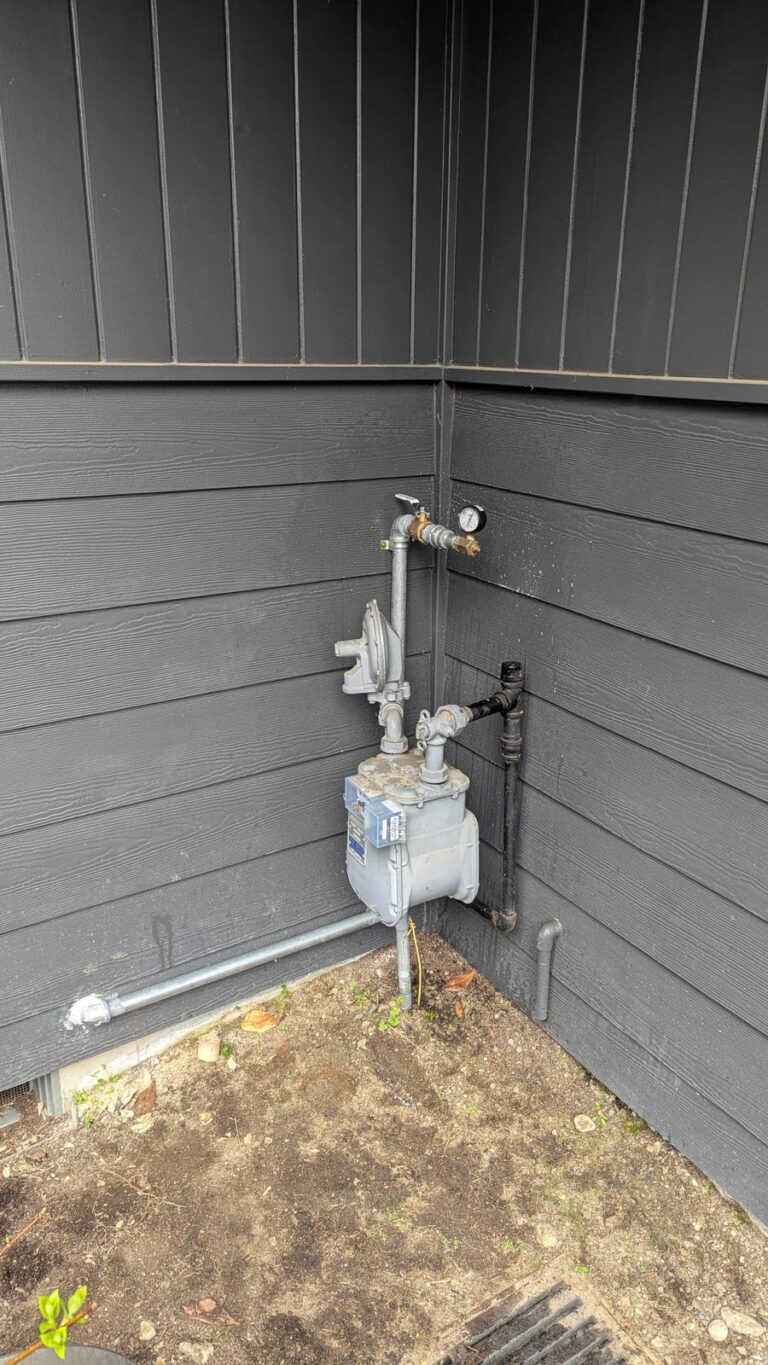
The meter is the other bottleneck. Many residential meters weren’t sized with a generator in mind, and if the total load is more than the meter can deliver, the utility has to install a larger one. Only the utility can do that work, so we check it early and flag it before it holds up the project.
Natural gas or propane?
If you have natural gas at the house, it’s the easy choice for a standby generator. There’s nothing to refill, which matters in a multi-day outage when roads are blocked and propane deliveries are backed up. Natural gas service usually keeps flowing when the power goes out.
One trade-off to know about: generators put out a little less power on natural gas than on propane. That’s why the 22-kilowatt unit above is rated at 19.5 kilowatts on natural gas. Your dealer will account for that when sizing the generator.
Without natural gas, propane works well, but the tank has to be big enough to carry you through a long outage. We run propane supply lines to generators too, mostly on rural properties in Snohomish and Skagit counties.
Getting a generator before the next storm?
Send us the generator model and where it’s going. We’ll size the gas line, check the meter and give you a free estimate.
Where the generator can go
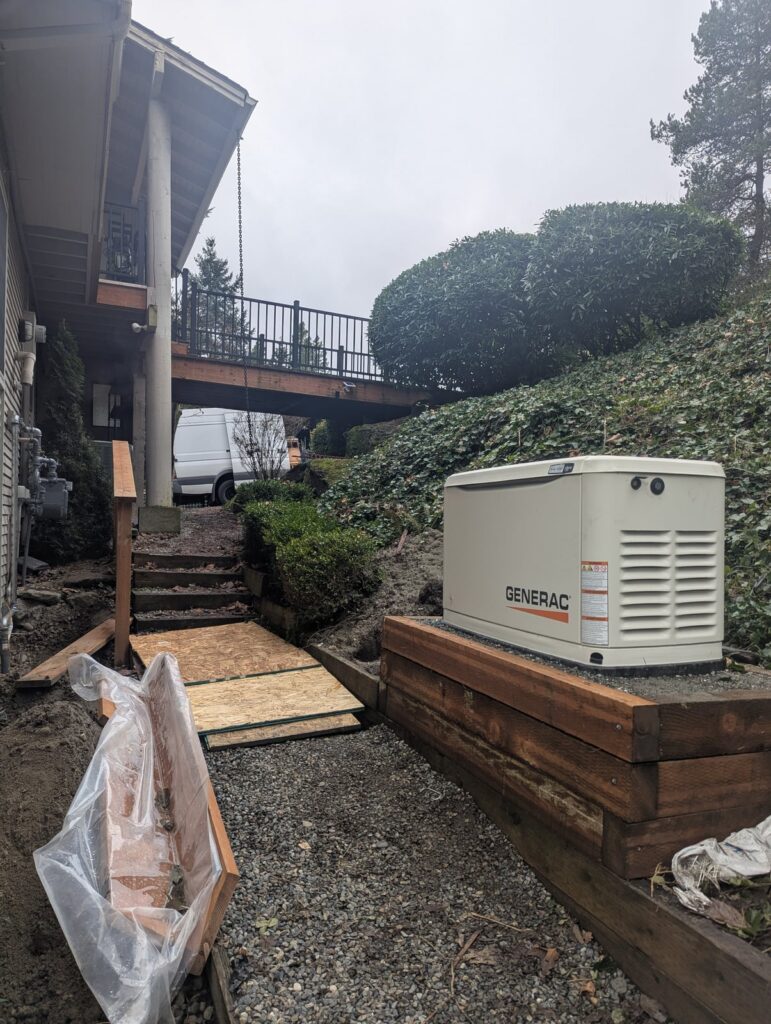
Generator exhaust contains carbon monoxide, so placement rules are strict. Under the national fire code standard Generac follows, the unit has to sit at least five feet from windows, doors, vents and other openings into the house. Some models are certified to sit as close as 18 inches from a wall. Others need more room. The installation manual for your model and local codes set the final numbers, and some cities add setback or noise rules of their own.
From the gas side, the shorter the run from the meter, the less the line costs and the easier it is to size. A spot near the meter is often ideal, as long as the generator doesn’t block access to the meter or crowd the clearances around it.
Permits and who does what
A standby generator install usually involves three trades. The generator dealer supplies and sets the unit on its pad. An electrician installs the transfer switch and pulls the electrical permit. We run the gas line, pull the gas piping permit and make the final connection.
The order matters. We coordinate timing with the dealer and electrician so the gas line is ready when the generator lands, and we can be there for the final inspection if your jurisdiction wants everyone on site.
What it costs
The gas line to a standby generator typically runs $400 to $1,500 or more. A short run near the meter sits at the low end. A long run, a dedicated line from the meter or larger pipe for a big generator pushes it higher.
For the whole project, a natural gas whole-house generator commonly costs $6,000 to $11,000 or more installed, depending on the generator size and the electrical work. If the utility needs to upgrade your meter, that’s a separate item, and permits add to the total. For more on what drives gas line pricing, see our guide to gas line installation cost in the Seattle area.
Don’t wait for the first windstorm
Generator demand spikes right after big outages, and dealers, electricians and the utility all get backed up. If you want a generator running this winter, start now. Pick the unit, get the gas line and meter sorted out, and have everything in place before the storms line up off the coast.
Get your generator gas line done right
We size, install and permit gas lines for standby generators across King, Snohomish and Skagit counties, and we work alongside your dealer and electrician.
See how we handle generator installs on our standby generator gas line page.
Common questions
What size gas line does a generator need?
It depends on the generator’s fuel demand, the distance from the meter and what else is on the gas system. There’s no single answer, which is why we size it from the manufacturer’s specs for your model. Tell us the generator model and we’ll do the math.
Can my existing gas line handle a generator?
Usually not as-is. Household piping is sized for the appliances you already have, and a generator can more than double the load. Some homes need a new branch, some need larger pipe back to the meter, and some need a dedicated line.
Will my generator still run after an earthquake?
If your home has an automatic seismic gas shutoff valve and it trips, the generator loses its gas supply along with everything else. That’s the valve doing its job. Once the house has been checked for leaks and the valve is reset, the generator can run again. Our post on earthquake gas shutoff valves explains how that works.
Do you install the generator itself?
We handle the gas side: sizing, the line, the permit and the connection. The generator dealer sets the unit and an electrician handles the transfer switch. We regularly work alongside both, and we’re happy to coordinate with whichever dealer and electrician you choose.